How Can a 30-Count Gummy Jar Ever Meet a 0.4 mg Per-Container Limit?
A jar with 30 gummies can meet a 0.4 mg THC per-container limit only if the total amount of THC in the entire jar stays at or below 0.4 mg—not if each gummy contains 0.4 mg. That is a very small allowance: divided evenly across 30 gummies, it works out to about 0.013 mg of total THC per gummy.
That distinction matters as federal hemp rules change. A product that once appeared compliant because its delta-9 THC level was low may need a closer look at other THC forms, including THCA, and at how much is in the whole retail package. The short takeaway: check total THC in the container, not just delta-9 THC per gummy.
First, what does “0.4 mg per container” mean?
A milligram (mg) measures the weight of a substance. A limit of 0.4 mg per container is a cap on the total covered THC in the defined retail container. It is not a per-serving limit, and it is not a cap of 0.4 mg for every gummy.
For a 30-count jar, the basic arithmetic is:
0.4 mg total THC ÷ 30 gummies = approximately 0.0133 mg per gummy.
That calculation assumes the THC is evenly distributed. Real products can have small differences between pieces, so a brand cannot safely rely on the average alone if some individual gummies test higher. It also cannot assume that a label serving size changes the container-wide limit. If the rule applies to the whole container, the relevant number is the total for that container.
Question What to check Is the limit per gummy? No. A per-container cap applies to the whole defined package. Can the label list 0.4 mg per serving? That would not establish compliance with a 0.4 mg total THC per-container cap. Does a 30-count jar get 30 times the allowance? No. Not if the applicable rule sets the cap per container.Why the federal hemp definition matters
Federal hemp policy has long been associated with a threshold based on delta-9 THC concentration in the plant. But the federal definition of hemp and the rules for finished hemp-derived products are not necessarily the same question. A product can meet one definition or threshold and still face separate restrictions on its ingredients, total THC, packaging, or sale.
Recent federal changes have put more focus on finished products and on forms of THC beyond delta-9. The details—including the effective date, how a “container” is defined, and how the cap is applied—need to be checked against the enacted law and any implementing guidance in force when a product is manufactured or sold. State rules may also be stricter, and retailers can set their own acceptance standards.
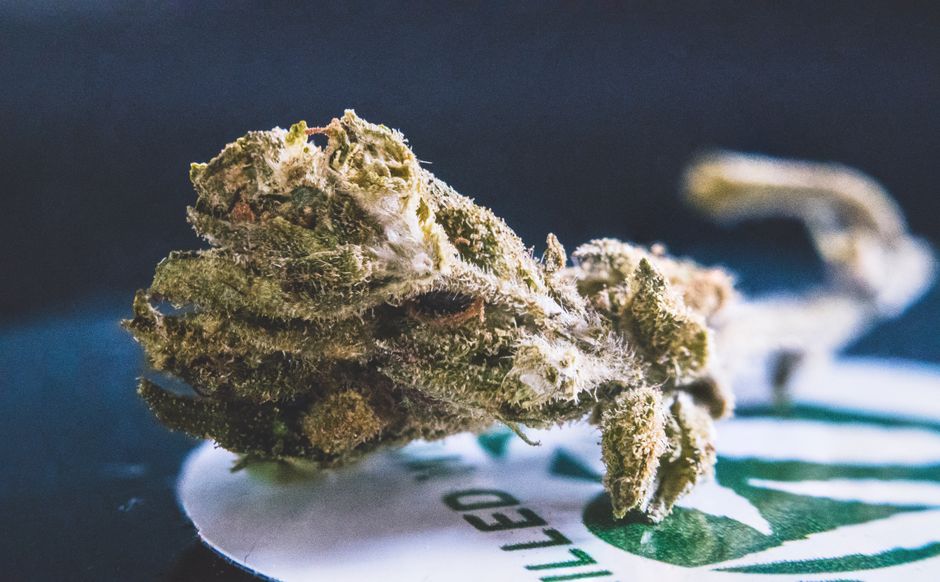
So, when someone says “the hemp limit,” ask what limit they mean. Are they talking about hemp plant material, delta-9 concentration, the total THC in a finished product, or a state rule? Those are not interchangeable.
Delta-9 THC versus total THC
Delta-9 THC is one specific form of tetrahydrocannabinol, commonly measured in hemp and cannabis products. A label or test result that reports only delta-9 answers a narrow question: how much delta-9 did the lab measure under its method?
Total THC is a broader measure. Depending on the rule and the lab’s reporting convention, it can account for delta-9 THC plus THC that may be created when THCA is heated. That matters because a product may show little delta-9 THC before heating while containing measurable THCA.
For a consumer, the practical takeaway is simple: a low delta-9 result does not automatically mean the product is under a total THC per-container cap. Look for the full cannabinoid results and confirm what the applicable rule includes.
Why THCA and its conversion matter
THCA is the acidic precursor to delta-9 THC found in unheated cannabis material. When exposed to heat, some THCA can convert into delta-9 THC. This process is called decarboxylation. Because conversion is not a perfect one-to-one change by weight, laboratories and regulations commonly use a conversion factor when estimating “total THC.”
A widely used calculation is:
Total THC = delta-9 THC + (THCA × 0.877).
The 0.877 factor accounts for the difference in molecular weight after THCA loses a carbon dioxide group during conversion. It is a calculation, not a promise that every molecule converts in every product or use. Always check the method and reporting basis stated on the certificate of analysis (COA), and follow the formula specified by the applicable rule.
A simple example
Imagine a 30-gummy jar whose lab report shows 0.10 mg of delta-9 THC and 0.50 mg of THCA for the whole jar. Using the common calculation:
0.10 mg + (0.50 mg × 0.877) = 0.5385 mg estimated total THC.
That result would be above a 0.4 mg total THC per-container cap, even though delta-9 alone is only 0.10 mg. The example is illustrative; a real assessment must use the report’s units, the tested sample, the lab’s methods, and the applicable legal definition.
How a 30-count gummy jar could meet the cap
There are several ways a product might come in under the cap, depending on its ingredients and manufacturing process. The finished jar would need to contain no more than 0.4 mg of the usda certified organic CBD THC forms counted by the relevant rule. That could mean the gummies are formulated with very little THC to begin with, or with a cannabinoid ingredient that does not contribute appreciable THC under the applicable definition.
But “very little” needs to be demonstrated, not assumed. A brand should:
- Identify the legal limit. Confirm the current federal rule, its effective date, the definition of “container,” and any state requirements.
- Test the finished product. Ingredient specifications alone do not show what ended up in the jar after mixing, depositing, and packaging.
- Measure relevant THC forms. The panel should address delta-9 THC and THCA where required, rather than relying on a delta-9-only result.
- Calculate the container total. Use the tested concentration, the net product amount, and the right units to determine the amount in the whole package.
- Account for variability. Consider batch variation, gummy-to-gummy variation, and a suitable margin below the limit.
- Make the label clear. State the serving information accurately, but do not present a per-serving number as though it proves compliance with a container-wide cap.
If the cap is 0.4 mg for the jar, a label saying “0.4 mg per gummy” would describe a very different—and much larger—amount. In a 30-count jar, that would equal 12 mg total if each gummy truly contained 0.4 mg. Always distinguish the amount per piece, per serving, and per container.
What a COA should show
A certificate of analysis (COA) is a lab report for a specific sample or batch. It is useful only when it is relevant to the product in hand and reports the information needed to assess the claim. A polished PDF is not enough by itself.
For a THC limit review, look for:

- Product and batch identification: The name, lot or batch number, and sample details should match the package.
- Testing date and laboratory: Check that the report is recent enough for the product and comes from a qualified lab.
- Analytes: Look for delta-9 THC and THCA when relevant, plus any other forms required by the rule.
- Units and basis: Confirm whether results are reported per gram, per serving, per package, or as a percentage.
- Detection limits: “Not detected” means below the lab’s stated detection or quantitation threshold—not necessarily absolute zero.
- Calculation details: Check whether total THC is reported directly or must be calculated, and which formula is used.
“THC-free” is a particularly strong claim. It should be supported by appropriate third-party lab testing, clear reporting limits, and a definition of what the company means by “free.” A delta-9-only result marked “not detected” does not establish that THCA or every other relevant THC form is also absent.
Third-party lab testing: what it can and cannot prove
Third-party lab testing can provide an independent measurement of a submitted sample. It does not, by itself, decide whether a product is legally compliant. That depends on the applicable law, the product category, the test method, the sample, the packaging definition, and sometimes state-specific rules.
Ask whether the sample represents the finished product and whether the COA’s units allow the container total to be calculated. If the report gives THC in milligrams per gram, for example, the amount in the jar depends on how many grams of product are in that jar. If it reports a percentage, the conversion also depends on the sample mass. A concentration is not automatically the same thing as a total amount per container.
Brands such as Joy Organics may be part of a shopper’s comparison when reviewing hemp-derived products and available lab documentation. Regardless of brand, use the same checklist: match the COA to the lot, inspect the full cannabinoid panel, and verify whether the reported number is per serving or per container.
Common mistakes to avoid
- Reading only the front label: Marketing claims do not substitute for a batch-specific COA.
- Confusing “per serving” with “per container”: A serving-size statement does not multiply or shrink a container-wide cap.
- Checking delta-9 and ignoring THCA: That can miss THC relevant to a total-THC calculation.
- Assuming “non-detect” means zero: Review the lab’s reporting limits and analytes.
- Comparing unlike units: Milligrams per gram, milligrams per gummy, percent by weight, and milligrams per jar are different ways of reporting results.
- Assuming a federal standard settles every question: State law, effective dates, product rules, and retailer policies may also matter.
Bottom line for shoppers and retailers
A 30-count gummy jar can meet a 0.4 mg THC per-container cap only if the total amount of THC counted under the applicable rule is at or below 0.4 mg across the entire defined package. If divided evenly, that is roughly 0.0133 mg per gummy—but compliance is assessed using the legally relevant container total, not just that average.
For the most reliable check, match the lot number to the COA, confirm that the lab measured delta-9 THC and THCA where required, understand the total-THC calculation, and convert the reported result into milligrams for the whole jar. In one sentence: the delta-9 gummy limit is not necessarily the total THC per container cap, so verify both the analytes and the package-wide math.
This article is for general educational purposes, not legal advice. Federal and state requirements can change, and the precise application of a 0.4 mg cap depends on the law and guidance in effect for the product and market.